
Home     BP Devices & Cuffs     BP Cuffs     Eclipse D-Ring Cuff
Eclipse D-Ring Cuff

Eclipse D-Ring Cuff

Overview

If you have ever tried to take your own blood pressuring measurement using an automated device without assistance, then you know how difficult proper blood pressure cuff placement can be. With unique design features that simplify BP cuff positioning and significantly reduce the possibility of improper use, the Eclipse D-Ring blood pressure cuffs are a great choice for home monitoring and self-application environments.

Features & Benefits

  • Durability: Value in a long-lasting, high-quality nylon material provides a durable yet comfortable blood pressure cuff solution for multiple BP readings.
  • Easy Cleaning/Disinfecting: High-quality material with a removable bladder makes it easier to clean, disinfect, or machine wash the BP cuff.
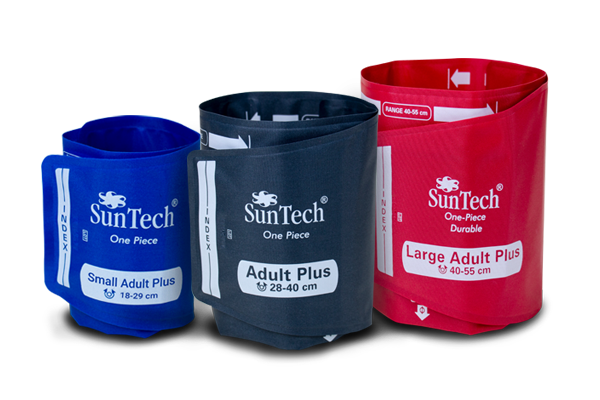
  • Ease of Use: Innovative design allows proper positioning to provide reliable and repeatable blood pressure measurement readings. Adult Plus and Large Adult sizes add a gentle curve to provide a custom-fit feel that helps the blood pressure cuff stay in place.
  • Reliable: 100% leak tested for trust, value, and reliability.
  • Regulatory: Engineered to meet AHA, AAMI-SP10, and MDD guidelines for accurate results you can trust.
  • Latex-Free/PVC-Free: 100% latex-free and PVC-free promotes patient safety.
  • Customizable: Advertise your name with private labeling solutions available to meet branding/marketing needs.

Product FAQs

Q. 

Why is it important to use the correct size cuff on my patients?

A. 

SunTech Medical Cuffs are designed to meet the AAMI (Association for the Advancement of Medical Instrumentation) clinical standards for blood pressure cuffs. These standards were devised in order to ensure adequate pressure on the artery of the upper arm, which is necessary to produce an accurate blood pressure measurement. If a cuff is used on an arm larger than the specified range, the resulting reading will be falsely high. If a cuff is used on an arm that is smaller than the specified range, the resulting reading will be falsely low.

Q. 

How do I clean the Eclipse D-Ring Cuff?

A. 

The following cleaning methods have been applied 20 times to the cuff without any apparent negative effects.

  1. Medical Disinfectant Spray - The cuff may be sprayed with a mild disinfectant solution (e.g. Cidezyme®, ENZOL®, or 10% bleach solution), rinsed with distilled water, and line dry. Ensure that no liquid enters the bladder tubing.
  2. Medical Disinfect Wipe - Use a mild disinfectant wipe (e.g. Sani-Cloth®) and thoroughly wet cuff surface and line dry.
  3. Machine Wash - Remove bladder to machine wash the cuff shell. Machine wash warm (50–130°F, 10–54°C) with a mild detergent and line dry.
Q. 

What is the difference between a “standard” cuff and a “long” cuff (i.e. Adult and Adult Long cuff)?

A. 

A “long” cuff has the same range indicators and bladder size as a “standard” cuff, but the actual length is longer than that of a “standard” cuff.

Technical Specs

Cuff Size Range (cm) Female Quick Connect Threaded (Screw)
Pediatric Eclipse16–2298-0068-0198-0068-41
Small Adult Eclipse21–2998-0068-0298-0068-42
Adult Eclipse28–3798-0068-0398-0068-43
Large Adult Eclipse36–4698-0068-0498-0068-44

White Papers

Please select one or more white papers to download.

Show Abstract

Most people do not realize their blood pressure is constantly changing minute by minute in response to mood, activity, body position, etc. In fact, simple changes in your body, environment, and activities significantly impact your blood pressure and cause your blood pressure to fluctuate between 5 and 40 mmHg. It is important for medical professionals and patients to know factors that can temporarily cause significant deviations in blood pressure measurements to avoid misdiagnosis of hypertension and inappropriate prescriptions of anti-hypertension medications. Below is a list of 10 factors that can temporarily cause significant deviations in your blood pressure measurements.

Show Abstract
Healthcare associated infections or HAIs, (also known as “hospital-acquired” infections or “nosocomial” infections), are bacterial infections that patients acquire while receiving treatment for other conditions within a healthcare setting.
More than 70% of the bacterial infections that cause HAIs are resistant to at least one of the drugs commonly used to treat these infections.3 The three most troublesome forms of HAIs are: Methicillinresistant Staphylococcus aureus (MRSA), Vancomycin-Resistant Enterococci (VRE), and Clostridium Difficile (C. diff). There is also a newly discovered bacteria called New Delhi metallo-ß-lactamase-1 (NDM-1) that has shown to be resistant to all know antibiotics at this time.6 These antibioticresistant pathogens are not only creating an important and growing threat to the public health, they are also imposing significant economic consequences on healthcare systems worldwide.
Show Abstract

Blood Pressure Cuffs: Friend or Foe?
Authors: N. Walker, R. Gupta, J. Cheesbrough
Journal of Hospital Infection (2006); 63, 167–169

Nondisposable Sphygmomanometer Cuffs Harbor Frequent Bacterial
Colonization and Significant Contamination by Organic and Inorganic
Matter
Author: V. Base-Smith
American Association of Nurse Anesthetists Journal (1996); 64(2), 141–145

Blood Pressure Cuff as Potential Vector of Pathogenic Microorganisms: A
Prospective Study in a Teaching Hospital
Author: C. de Gialluly, C., V. Morange, E. de Gialluly, J. Loulergue, N. van der Mee, R. Qeuntin
Infection Control and Hospital Epidemiology (2006); 27(9), 940–943

Outbreak of Mupirocin-Resistant Staphylococcus Aureus on a
Dermatology Ward Associated with an Environmental Reservoir
Author: M.C. Layton, M. Perez, P. Heald, J. E. Patterson
Infection Control and Hospital Epidemiology (1993); 14(7), 369–375

Sphygmomanometers as a Reservoir of Pathogenic Bacteria
Author: M.A. Beard, A. McIntyre, P.M. Roundtree
Sphygmomanometers as a Reservoir of Pathogenic Bacteria (1969); 2, 758–760

The Microbial Flora of In-Use Blood Pressure Cuffs
Authors: M.G.M. Cormican, D. L., Low, P. Flynn, D. O’Toole
Irish Journal of Medical Sciences (1994): 4, 112–113